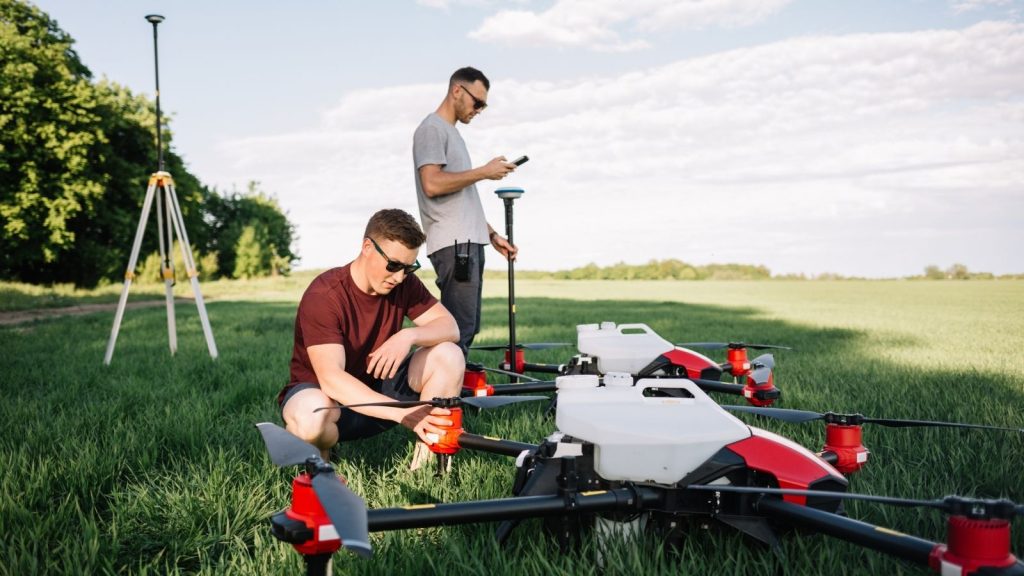
Become a Commercial Drone Pilot with CASA-Recognised Training
Whether you’re looking to launch a new career, expand your existing business, or legally operate drones for commercial work, completing a Remote Pilot Licence (RePL) course is the essential first step. At Drone Training Hub, we make it easy for individuals and businesses across Darwin and the Northern Territory to gain the knowledge and practical skills needed to operate drones safely, confidently and in accordance with Australian aviation regulations.
Commercial drone technology is transforming industries throughout the Northern Territory. From large-scale mining operations and civil construction projects to agriculture, environmental monitoring, tourism and emergency services, organisations are increasingly relying on qualified drone pilots to collect data, improve efficiency and reduce operational costs. As demand continues to grow, so does the need for properly trained and licensed operators.
Our CASA-recognised training program combines flexible online theory with practical flight instruction, allowing you to complete much of your study from home before attending your flight assessment. This blended learning approach provides greater flexibility for busy professionals while ensuring you receive the hands-on experience required to become a safe and competent commercial drone pilot.
Why Complete Your RePL in Darwin?
Darwin presents unique opportunities for commercial drone operations. The Northern Territory’s vast landscapes, remote infrastructure, expanding resource sector and rapidly growing construction industry have created increasing demand for qualified drone operators capable of working in challenging environments.
Unlike recreational flying, commercial drone operations require pilots to understand Australian airspace, aviation safety, operational planning and risk management. Completing a RePL not only allows you to operate commercially within CASA regulations but also demonstrates professionalism and competency to clients, employers and government organisations.
Many businesses now specify a Remote Pilot Licence as a minimum requirement when engaging drone operators. Holding a recognised qualification can significantly increase employment opportunities while providing confidence that your operations comply with Australian aviation legislation.
Flexible Training Designed Around You
Drone Training Hub understands that many students are balancing full-time employment, business commitments or family responsibilities. That’s why our training has been designed to provide maximum flexibility without compromising educational quality.
The theoretical component is completed online through structured learning modules that you can work through at your own pace. Once you’ve completed the theory, you’ll undertake practical flight training with experienced instructors who guide you through real-world commercial operating procedures, aircraft handling and flight assessment requirements.
This blended learning model reduces travel requirements while ensuring every graduate receives practical experience operating drones safely in accordance with CASA standards.
Learn From Experienced Drone Professionals
Choosing a training provider is about far more than simply obtaining a licence. Quality instruction can have a lasting impact on your confidence, safety and future career opportunities.
Our instructors bring extensive real-world operational experience across a range of commercial industries. Throughout your training, you’ll gain practical insights into flight planning, weather assessment, equipment selection, risk management and operational decision-making—skills that extend well beyond passing an assessment.
The result is a training experience focused on producing competent commercial drone pilots who are prepared for real operational environments rather than simply meeting minimum licensing requirements.
Supporting Commercial Drone Growth Across the Northern Territory
The commercial drone industry continues to evolve rapidly, with new technologies, applications and employment opportunities emerging every year. Organisations are increasingly integrating drone technology into routine operations because it improves workplace safety, reduces costs and provides access to information that would otherwise be expensive or difficult to obtain.
Qualified drone pilots are now working across industries including:
- Mining and resource operations
- Construction and infrastructure
- Agriculture and pastoral properties
- Surveying and mapping
- Environmental monitoring
- Asset inspections
- Renewable energy
- Government agencies
- Emergency response
- Tourism and media production
- Real estate marketing
Whether your goal is employment, business growth or adding drone services to an existing profession, obtaining your Remote Pilot Licence provides a strong foundation for operating legally and professionally throughout Australia.
What is a Remote Pilot Licence (RePL)?
A Remote Pilot Licence (RePL) is a nationally recognised qualification issued under the regulations of the Australian aviation system that permits pilots to operate drones for commercial purposes. It demonstrates that you have successfully completed both the theoretical and practical training required to fly remotely piloted aircraft safely and responsibly.
If you intend to use a drone for work, whether you’re charging clients directly or operating as part of your employment, obtaining the appropriate qualifications is an important step towards meeting Australia’s aviation requirements.
While recreational drone flying is generally limited to personal enjoyment and must follow the standard drone safety rules, commercial operations often involve additional responsibilities. These may include operating near work sites, collecting data for clients, conducting inspections or aerial surveys, and flying under an organisation’s operational procedures.
Completing professional drone training equips you with the knowledge to safely manage these operations while understanding the legal responsibilities that come with commercial flying.
Who Should Complete a RePL Course?
A commercial drone qualification is valuable across an increasingly diverse range of industries. Whether you’re starting a new career or expanding the services you already provide, professional training can help you operate legally and with greater confidence.
Many of our students come from industries such as:
-
Surveying and geospatial mapping
-
Construction and civil engineering
-
Mining and resources
-
Agriculture and precision farming
-
Environmental and wildlife monitoring
-
Infrastructure and utility inspections
-
Real estate and property marketing
-
Photography and videography
-
Tourism and destination marketing
-
Emergency services and disaster management
-
Government departments
-
Small business owners looking to add drone services
For many professionals, adding drone capabilities can create new revenue opportunities while improving efficiency and reducing the need for costly manual inspections.
Why Professional Training Matters
Modern drones are capable of producing remarkably accurate imagery, mapping data and inspections. However, operating commercially requires far more than simply being able to fly the aircraft.
Professional drone pilots need to understand:
-
Australian aviation regulations
-
Airspace classifications and restrictions
-
Flight planning procedures
-
Weather assessment
-
Operational risk management
-
Human factors and decision making
-
Emergency procedures
-
Pre-flight and post-flight inspections
-
Battery management and aircraft maintenance
-
Safe operating practices around people, vehicles and infrastructure
These skills help protect both the pilot and the public while ensuring commercial operations are conducted safely and professionally.
Understanding CASA Requirements
Australia has one of the world’s most respected aviation safety systems, with drone operations regulated by the Civil Aviation Safety Authority (CASA).
Depending on the type of work being undertaken, commercial drone operators may require more than simply completing pilot training. Business operations, aircraft categories and the nature of each operation can all influence the regulatory requirements that apply.
Understanding these obligations before commencing commercial work helps operators remain compliant while providing confidence to clients who expect professionally trained pilots.
Throughout your training you’ll gain an understanding of the operational framework that governs commercial drone flying, helping you develop sound decision-making skills that extend well beyond passing an assessment.
Is a RePL Difficult to Obtain?
One of the most common questions prospective students ask is whether commercial drone training is difficult.
The answer largely depends on your willingness to learn rather than any previous aviation experience.
Most students have never flown professionally before commencing their training. The course is specifically designed to guide you through each stage, building your knowledge progressively before moving into practical flight exercises.
Experienced instructors provide support throughout both the online learning and practical components, ensuring you understand not only how to fly a drone, but also why aviation procedures exist and how they contribute to safe operations.
By the end of the course, most graduates are surprised by how much confidence they have developed, both in operating the aircraft and in making sound operational decisions.
Can Beginners Complete a Commercial Drone Course?
Absolutely.
Many students begin with little or no prior drone experience. The course has been designed to accommodate beginners while also providing value for experienced recreational pilots looking to transition into commercial operations.
If you’ve flown drones recreationally, you’ll likely find some practical skills familiar. However, commercial operations introduce a much broader understanding of aviation safety, planning and legal responsibilities.
For complete beginners, the structured learning pathway makes it easy to build knowledge progressively before undertaking practical flight training.
Building Skills That Extend Beyond the Licence
A commercial drone qualification is often viewed as the beginning of a pilot’s journey rather than the final destination.
Technology continues to evolve rapidly, with new aircraft, sensors, software platforms and industry applications emerging every year. Professional training provides a strong foundation that allows graduates to confidently adapt to new technologies and expand into specialised sectors as their experience grows.
Whether your long-term goal is aerial photography, industrial inspections, mapping, agriculture or infrastructure projects, the knowledge gained during your training provides the platform for ongoing professional development.
What You’ll Learn During Your Commercial Drone Training
At Drone Training Hub, our goal is to prepare you for more than simply passing a flight assessment. We focus on developing confident, knowledgeable and safety-conscious drone pilots who are ready to apply their skills in real-world commercial environments.
Our blended learning approach combines self-paced online theory with practical flight instruction, giving students the flexibility to study around work and family commitments while still receiving comprehensive hands-on training from experienced instructors.
Whether you’re looking to start a new career or add drone services to your existing business, the course has been designed to build your knowledge progressively, ensuring you understand not only how to operate a drone safely, but also why aviation procedures are essential.
Flexible Online Theory Training
The theory component provides the knowledge foundation every commercial drone pilot needs before taking to the skies.
Studying online allows you to complete lessons at your own pace from anywhere in Darwin, regional Northern Territory or elsewhere in Australia, making it an ideal option for busy professionals or those living in remote locations.
During your theory training you’ll develop an understanding of topics including:
-
Australian aviation legislation
-
Drone safety principles
-
Airspace classifications
-
Weather interpretation
-
Human factors and decision making
-
Navigation fundamentals
-
Flight planning
-
Risk assessment
-
Radio communication awareness
-
Emergency procedures
-
Aircraft performance and limitations
-
Battery safety and maintenance
Rather than simply memorising information for an assessment, you’ll gain practical knowledge that can be applied throughout your commercial drone career.
Practical Flight Training
Once your theory component has been completed, you’ll move on to practical flight instruction where your knowledge is put into action.
Under the guidance of experienced instructors, you’ll learn how to safely prepare, operate and manage a range of flight scenarios commonly encountered during commercial operations.
Practical training typically includes:
-
Aircraft familiarisation
-
Pre-flight inspections
-
Safe take-off and landing techniques
-
Hovering and controlled manoeuvres
-
Manual flight skills
-
Emergency procedures
-
Mission planning
-
Operational decision making
-
Safe shutdown and post-flight procedures
Training is conducted in a supportive environment where students can build confidence progressively while receiving personalised feedback throughout the practical component.
Learn Industry Best Practice
One of the biggest differences between recreational flying and commercial operations is the emphasis placed on planning and risk management.
Professional drone operators are expected to assess each job before the aircraft even leaves the ground.
Throughout your training you’ll learn how experienced operators evaluate:
-
Site hazards
-
Airspace restrictions
-
Weather conditions
-
Nearby people and property
-
Emergency landing options
-
Client requirements
-
Equipment suitability
-
Operational risks
Developing these habits early helps improve both safety and professionalism while reducing the likelihood of incidents during commercial operations.
Training Designed for Real Commercial Work
The commercial drone industry has evolved well beyond aerial photography.
Today’s drone pilots may find themselves inspecting infrastructure, mapping construction sites, surveying farmland, monitoring environmental conditions or collecting high-resolution imagery for engineering projects.
Because of this, our training focuses on practical decision-making rather than simply teaching students how to fly an aircraft.
You’ll develop the skills needed to approach each flight methodically, assess changing conditions and make informed decisions that align with industry best practice.
These are the qualities that employers and clients increasingly look for when engaging commercial drone operators.
Learn From Experienced Drone Instructors
The quality of your instructor can significantly influence your confidence and long-term success as a commercial drone pilot.
Our instructors bring real operational experience across a variety of commercial sectors, allowing them to share practical insights that extend well beyond the training syllabus.
Students benefit from guidance on:
-
Common mistakes made by new operators
-
Efficient flight planning techniques
-
Equipment selection
-
Client expectations
-
Operational workflow
-
Safety management
-
Building confidence in real-world environments
Learning from experienced professionals helps bridge the gap between obtaining a licence and becoming a capable commercial drone operator.
Ongoing Confidence Beyond Graduation
Completing your course is only the beginning of your journey.
As drone technology continues to evolve, the knowledge gained during your training provides a strong foundation for future growth. Many graduates continue into specialised sectors such as aerial surveying, thermal imaging, asset inspections, precision agriculture and advanced aerial cinematography.
By understanding the principles behind safe and compliant drone operations, you’ll be well positioned to adapt to new aircraft, emerging technologies and changing industry requirements throughout your career.
Why Students Choose Drone Training Hub
Students across Australia choose Drone Training Hub because we focus on delivering practical, high-quality training that prepares graduates for real commercial operations.
Our commitment to flexible learning, experienced instruction and student support allows you to develop both the technical knowledge and operational confidence needed to succeed in one of Australia’s fastest-growing industries.
Commercial Drone Applications Across Darwin and the Northern Territory
The Northern Territory offers one of Australia’s most diverse environments for commercial drone operations. From remote mining sites and vast pastoral properties to major infrastructure projects and environmental conservation programs, drones are becoming an essential tool for improving safety, reducing costs and increasing operational efficiency.
As drone technology continues to advance, businesses and government agencies are discovering new ways to collect accurate aerial data, inspect assets and monitor large areas that would otherwise be expensive, time-consuming or hazardous to access.
For qualified commercial drone pilots, this creates exciting career opportunities across a broad range of industries.
Mining and Resource Operations
Mining remains one of the Northern Territory’s most significant industries, with many operations now integrating drone technology into their day-to-day activities.
Commercial drones can assist with:
-
Open-cut mine inspections
-
Stockpile volume calculations
-
Infrastructure monitoring
-
Environmental compliance reporting
-
Exploration surveys
-
Tailings dam inspections
-
Progress reporting
-
Safety assessments
By capturing high-resolution imagery and accurate aerial data, drones allow engineers, surveyors and site managers to make informed decisions while reducing the need for personnel to enter potentially hazardous areas.
Agriculture and Large Pastoral Properties
The Northern Territory is home to some of Australia’s largest cattle stations and agricultural enterprises, where drones are increasingly used to improve productivity across enormous landholdings.
Commercial drone operations may include:
-
Livestock monitoring
-
Fence inspections
-
Water point assessments
-
Crop health analysis
-
Weed identification
-
Irrigation monitoring
-
Property mapping
-
Land management planning
These technologies enable property owners to monitor vast areas more efficiently while reducing travel time and operational costs.
Construction and Civil Infrastructure
Construction companies throughout Darwin continue to embrace drone technology throughout every stage of a project.
Qualified drone pilots are frequently engaged to provide:
-
Site progress photography
-
Earthworks monitoring
-
Volume calculations
-
Orthomosaic mapping
-
Roof inspections
-
Structural documentation
-
Client progress reports
-
Marketing imagery
Regular aerial surveys allow project managers to track construction milestones, improve communication with stakeholders and identify potential issues before they become costly delays.
Surveying, Mapping and Spatial Data
Modern drones equipped with advanced positioning systems have transformed the surveying industry.
Commercial operators can capture highly accurate aerial imagery that is processed into:
-
Orthophotos
-
Topographic maps
-
Digital surface models
-
3D terrain models
-
Contour mapping
-
Site measurements
-
Volumetric calculations
These datasets support engineers, architects, planners and environmental consultants across a wide variety of projects.
Infrastructure and Asset Inspections
Many assets throughout the Northern Territory are located in remote or difficult-to-access areas.
Rather than relying on elevated work platforms or manual inspections, organisations increasingly utilise drones to inspect:
-
Communication towers
-
Solar farms
-
Wind energy infrastructure
-
Bridges
-
Rail corridors
-
Roads
-
Pipelines
-
Water storage facilities
-
Industrial buildings
Drone inspections often improve workplace safety while reducing downtime and delivering detailed imagery that can be reviewed long after the flight has been completed.
Environmental Monitoring and Conservation
Environmental management is another rapidly growing application for commercial drones throughout northern Australia.
Government agencies, researchers and environmental consultants use drones to assist with:
-
Coastal monitoring
-
Wetland surveys
-
Vegetation mapping
-
Wildlife observation
-
Habitat assessments
-
Fire recovery monitoring
-
Erosion analysis
-
Weed management
-
Environmental reporting
High-resolution aerial imagery enables researchers to monitor environmental change over time while minimising disturbance to sensitive ecosystems.
Tourism, Hospitality and Destination Marketing
Darwin and the Northern Territory attract visitors from around the world, making professional aerial imagery highly valuable for tourism operators.
Commercial drone pilots frequently work with:
-
Tourism operators
-
Accommodation providers
-
Adventure tourism businesses
-
Resorts
-
Caravan parks
-
Visitor attractions
-
Regional tourism organisations
-
Marketing agencies
Professional aerial video and photography help showcase destinations from unique perspectives while creating engaging promotional content for websites, advertising campaigns and social media.
Real Estate and Property Marketing
Property marketing has become one of the most recognised commercial applications for drone technology.
Licensed drone operators assist residential, commercial and rural property agencies by producing:
-
Aerial photography
-
Cinematic property videos
-
Lifestyle imagery
-
Boundary overviews
-
Rural property presentations
-
Development site marketing
For larger rural holdings and commercial developments, aerial imagery provides prospective buyers with valuable context that traditional ground photography simply cannot achieve.
Emergency Services and Disaster Response
Commercial drones are increasingly supporting emergency management agencies throughout Australia.
Applications include:
-
Flood assessments
-
Bushfire monitoring
-
Storm damage inspections
-
Search assistance
-
Disaster recovery planning
-
Hazard identification
-
Infrastructure assessments
The ability to rapidly collect aerial intelligence allows emergency responders to make faster, more informed decisions while reducing risks to personnel operating on the ground.
Expanding Career Opportunities
As industries continue adopting drone technology, the demand for qualified operators continues to grow.
Many graduates use their qualification to:
-
Start their own drone service business
-
Add aerial services to an existing company
-
Gain employment with surveying or engineering firms
-
Support agricultural operations
-
Work within government agencies
-
Provide inspection services
-
Produce commercial photography and video
-
Deliver mapping and data collection services
The versatility of commercial drone technology means a single qualification can open opportunities across multiple industries, allowing operators to diversify their skills and adapt as new applications emerge.
Preparing for the Future of Commercial Drone Operations
Drone technology is evolving rapidly, with advances in automation, artificial intelligence, thermal imaging, LiDAR, multispectral sensors and cloud-based data processing transforming the way organisations operate.
Pilots who invest in professional training today are positioning themselves to take advantage of these emerging technologies as demand continues to grow across Australia.
Why Choose Drone Training Hub for Your RePL Course?
Choosing the right training provider is one of the most important decisions you’ll make on your journey to becoming a commercial drone pilot. While every CASA-recognised course must meet regulatory standards, the quality of instruction, flexibility of learning and ongoing support can make a significant difference to your confidence and long-term success.
At Drone Training Hub, we believe learning should extend well beyond simply obtaining a licence. Our goal is to equip students with the practical knowledge and operational confidence required to safely integrate drone technology into their careers or businesses.
Flexible Learning That Fits Around Your Lifestyle
We understand that many students are balancing full-time employment, running businesses or managing family commitments. That’s why our training has been developed using a blended learning model that combines online theory with practical flight instruction.
This flexible approach allows you to complete much of your learning from home before attending your practical training, reducing unnecessary travel while giving you the freedom to study at times that suit your schedule.
Experienced Industry Instructors
Learning from instructors with genuine commercial drone experience provides insights that simply can’t be gained from textbooks alone.
Throughout your course you’ll benefit from practical advice gained from real-world operations across a wide variety of industries, helping you understand not only how to operate a drone safely, but also how commercial operators plan flights, manage risks and deliver professional outcomes for clients.
Practical Skills That Employers Value
Employers increasingly seek drone pilots who understand more than just aircraft controls.
Professional operators need to demonstrate sound judgement, strong planning skills and a commitment to aviation safety. Our training emphasises these qualities throughout every stage of the course, helping graduates develop the confidence to operate safely in real commercial environments.
Supporting Students Beyond the Classroom
For many students, obtaining a Remote Pilot Licence is only the first step.
Some plan to launch their own aerial services business, while others want to expand an existing profession or pursue employment within industries that utilise drone technology.
Our commitment is to provide training that gives students a strong foundation for ongoing professional development as technology, regulations and commercial opportunities continue to evolve.
Frequently Asked Questions
How long does a RePL course take?
Course duration varies depending on the training pathway and your individual progress. The flexible online theory component allows you to study at your own pace before completing practical flight instruction and assessment.
Do I need previous drone experience?
No. Many students begin with little or no flying experience. The course has been designed to progressively build both theoretical knowledge and practical skills, making it suitable for beginners as well as experienced recreational pilots.
Can I complete the theory online?
Yes. The theory component is delivered online, allowing you to study from Darwin, regional Northern Territory or anywhere else in Australia before attending your practical flight training.
What industries employ commercial drone pilots?
Commercial drone pilots work across a diverse range of industries including mining, agriculture, surveying, construction, infrastructure inspections, environmental monitoring, emergency services, photography, videography, tourism and government.
Will I be qualified to operate commercially after completing the course?
Successful completion of your training provides the knowledge and practical skills required to operate commercially within the applicable Australian aviation framework. Depending on the type of operations you intend to undertake, additional operational approvals or organisational requirements may also apply.
Is commercial drone flying a good career?
Demand for qualified drone operators continues to grow as more industries adopt aerial technologies for inspections, mapping, data collection and monitoring. Many graduates find opportunities through employment, contracting or by establishing their own drone services business.
Can businesses enrol multiple staff members?
Yes. Many organisations choose to train several employees to safely integrate drone technology into their day-to-day operations. Group and corporate training options are available for businesses seeking to build in-house drone capability.
Take the Next Step Towards Becoming a Commercial Drone Pilot
Commercial drone technology is reshaping industries throughout Darwin, the Northern Territory and across Australia. As organisations increasingly rely on aerial data, inspections and advanced drone applications, the demand for skilled, safety-focused drone pilots continues to grow.
Whether you’re looking to begin a new career, enhance your existing profession or introduce drone services into your business, completing professional training provides the knowledge, confidence and practical skills needed to operate safely and professionally.
Drone Training Hub is committed to delivering high-quality, flexible training that prepares students for real-world commercial operations—not simply for passing an assessment.
If you’re ready to invest in your future and join one of Australia’s fastest-growing industries, contact Drone Training Hub today to learn more about upcoming training opportunities, course availability and how to begin your journey towards becoming a qualified commercial drone pilot.