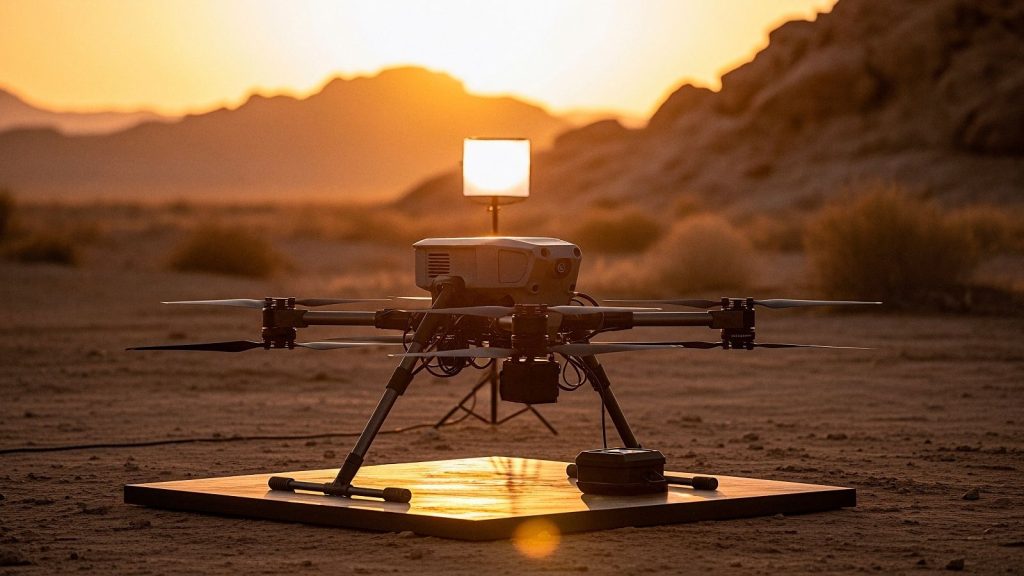
Northern Territory businesses are investing in Drone Training for Staff because drones have shifted from gadgets to core business tools. Leaders want safer inspections, faster site information, and clearer decision making without waiting on external contractors. When staff hold recognised aviation licences and follow standard procedures, drone work becomes repeatable, auditable, and ready for client scrutiny.
Across the NT, drones now support construction, mining, agriculture, infrastructure and government work. They map remote roads, check pits and stockpiles, inspect roofs and towers, monitor country, and document progress for clients hundreds of kilometres away. Under CASA rules, most of this activity sits firmly in commercial operations, which means staff need proper training, a Remote Pilot Licence and compliant workplace drone operations.
Why Drone Training For Staff Is On The Rise In The Northern Territory
Drone Training for Staff has become a boardroom and site management topic rather than a side project for a keen hobby pilot. Drone Training Hub fits into this picture as a CASA aligned, plain English training partner that understands regional and remote NT conditions. Reading on, decision makers gain a clear view of why training matters, which industries are leading, how the numbers stack up, and a practical pathway to build safe, in house drone capability.
“The risk is not using drones; the risk is using drones without a proper training and governance framework.” – Adapted from common safety management principles
Key Takeaways
-
Northern Territory organisations are prioritising Drone Training for Staff to reduce risk, cut field time and capture higher quality data with their own teams. This shift turns drones into standard work tools rather than ad hoc experiments. It also helps managers link drone activity directly to safety and productivity targets.
-
CASA compliant RePL training for teams is now the baseline for serious commercial work with 2 to 25 kilogram drones on NT sites. When multiple staff hold licences and follow shared procedures, drone jobs slot cleanly into WHS systems and client requirements. This steadies operations and supports long term planning.
-
Building internal capability through structured corporate drone training gives faster response times than relying only on contractors. In house pilots can fly the same day for a stockpile check, safety inspection or flood assessment. Over time this control over timing, standards and data turns into clear return on investment.
-
A staged approach works best for most NT businesses, starting with a small group of licensed pilots then expanding as demand grows. This can lead towards a Remote Operator’s Certificate and a mature enterprise drone program. Drone Training Hub supports this growth with blended learning, group programs and NT aware support.
Why Northern Territory Businesses Are Investing In Drone Training For Staff
Northern Territory businesses are investing in Drone Training for Staff so they can meet CASA rules, cut survey and inspection costs, and keep people away from high risk work areas. Trained in house pilots collect accurate data on demand, feeding site decisions without long delays. Formal commercial drone training Northern Territory wide turns drones into predictable business assets instead of informal gadgets.
The NT context makes this even more important:
-
Many projects sit hours from the nearest town.
-
Work often runs along long road corridors, in remote communities or on large stations and mine sites.
-
Sending a crew back because an external drone operator was not available or missed a key shot can waste days.
When staff hold a Remote Pilot Licence and follow standard flight planning, data capture happens on the first visit far more often.
Relying on untrained but keen staff to fly work drones creates real risk, a concern echoed in research leveraging drone technology in health systems that highlights governance and compliance as critical to safe operations. CASA can treat unsafe or non compliant flying as an aviation incident, and insurers expect that pilots meet appropriate licensing and procedural standards. Without proper drone operator training, a business carries extra exposure under both aviation rules and WHS law, especially if flights happen near workers, plant or public areas.
Many NT organisations used to outsource nearly all aerial work. That still has a place for complex BVLOS jobs or heavy lift tasks, but more are now building internal drone workforce development. Trained staff understand local hazards, assets and workflows, so they plan better flights and deliver data that fits existing systems. Managers are starting to view drones like survey gear or fleet vehicles, which only create value when skilled people operate them in a controlled enterprise drone program.
“Safety is not an add‑on to operations; it is the way operations are done.” – Widely used principle in aviation safety culture
Integrating trained drone pilots into existing safety systems reflects this mindset.
Which Northern Territory Industries Are Leading In Drone Training For Staff
Drone use in the Northern Territory is no longer limited to marketing videos. Multiple sectors are building structured drone training courses and RePL pathways for their teams. The common thread is a need for compliant operations, clear safety processes and staff who understand both flying and data.
Construction and civil contractors now use drones for:
-
Earthworks volumes
-
Progress mapping
-
Environmental checks
-
Aerial photography for reporting
With cranes, traffic and multiple crews on site, they need professional drone training focused on flying near structures and people while still meeting CASA separation rules. RePL qualified staff can handle quick checks between contractor visits and supply measurable data for project managers.
Mining and resources operators use drones for pit surveys, stockpile measurement, haul road checks and tailings monitoring. These sites combine heavy machinery, changing terrain and remote locations, so strong drone safety training is non negotiable. Standard procedures, pre flight checks and clear emergency plans help safety teams sleep at night while still getting the data they need.
Agriculture and pastoral operations spread over huge areas rely on drones for paddock mapping, water point checks, fence inspections and vegetation monitoring. UAV training for employees on stations lets managers send trained pilots out with utes and bikes rather than separate survey crews. Courses also address low level manned aircraft and private strips, which matter a lot in rural NT airspace.
Infrastructure, utilities and asset owners use drones to inspect powerlines, roads, bridges, towers, pipelines and culverts. Here, drone inspection training focuses on:
-
Repeatable flight paths
-
Image overlap and coverage
-
Reporting standards
Engineers can then trust that change over time is captured correctly. Staff aerial drone skills link directly to asset management systems and long term maintenance planning.
Government, councils and community organisations are increasing workplace drone operations for environmental monitoring, disaster response, land management and education. Structured training helps these teams support remote communities while maintaining public safety and privacy standards. Programs like Drone Training Hub’s Fly Forward NT also build future local talent for these roles.
The Business Case: In‑House Drone Training Versus Outsourcing Services
For NT decision makers, the key question is not whether drones are useful, but whether to invest in Drone Training for Staff or keep outsourcing. Both models have a role, yet the business case for in house capability is getting stronger for core, repeatable tasks. This is where structured drone training for businesses pays for itself.
Training staff through RePL programs means inspections, surveys and incident follow ups can happen as soon as weather and site conditions allow. In house pilots already understand local hazards, permit rules and client expectations, so their data drops straight into engineering, WHS or asset workflows. With RePL training for teams, businesses avoid queues for contractor availability and cut back on rework when data sets miss the brief.
Outsourcing still makes sense for highly specialised BVLOS missions, rare heavy lift spraying or niche sensor payloads used only a few times a year. In these cases, paying a specialist provider often costs less than purchasing and maintaining equipment plus advanced endorsements. Many NT organisations now run a mixed model, with internal pilots covering routine work and contractors handling rare or high risk jobs.
From a cost view, commercial drone training and aircraft purchase feel like a lump sum, but outsourcing can drain budgets through:
-
Day rates and overtime
-
Mobilisation and travel fees
-
Repeat visits when data is missing or inaccurate
A small fleet of well used drones, operated by licensed staff, reduces scaffolding and EWP hire, cuts manual inspection hours and can shorten shutdown windows. When these savings are tracked, corporate drone training often pays back within the first run of major projects.
Risk and compliance also sit firmly in the business case, and studies examining drone programs from theory to practice confirm that structured governance frameworks are essential for organisations seeking regulatory and operational credibility. CASA recognised commercial drone certification helps protect the organisation from regulatory penalties and strengthens its position with insurers and major clients. Drone Training Hub acts as a partner here, designing scalable drone pilot training programs for NT organisations, including group training and on site delivery where numbers and conditions allow.
What Effective Drone Training For Staff Includes (And Why It Matters)
Not all Drone Training for Staff is equal. Effective corporate programs sit on three main pillars, which together support a repeatable, auditable enterprise drone program. These pillars are CASA licensing, safety and risk management, and operational skills that deliver real business outcomes.
First pillar: Remote Pilot Licence RePL and CASA compliance
In Australia this is the core licence for commercial drone pilots, linked to aircraft weight categories and usually flown under a Remote Operator’s Certificate. For most NT work with 2 to 25 kilogram drones, RePL is the expected standard, even on remote sites. Drone Training Hub’s RePL training blends self paced online theory with in person flight training and assessment, giving staff a recognised remote pilot certificate that lines up with CASR Part 101 rather than an informal course.
Second pillar: Safety, risk management and procedures
Quality drone safety training covers:
-
Airspace rules and classifications
-
The Part 101 Manual of Standards
-
Standard operating conditions
-
Emergency procedures and contingency planning
Staff learn how to assess sites, identify hazards such as plant, powerlines and workers, and document controls in SWMS and risk forms. This integration with existing WHS frameworks keeps drone tasks aligned with the rest of the safety system instead of running as side jobs.
Third pillar: Operational skill and data capture
Pilots must be able to:
-
Plan missions around site constraints and airspace
-
Choose the right altitude, speed and overlap
-
Use automation for mapping and inspections where appropriate
-
Understand meteorology, navigation and equipment limits under NT heat, dust and wind
From basic aerial photography training through to LiDAR mapping, asset inspections and aerial surveying concepts, the focus stays on collecting data that decision makers can trust.
Many NT organisations later look towards a Remote Operator’s Certificate (ReOC) so they can manage their own procedures and pilots. Drone Training Hub’s professional packages support this by guiding ReOC documentation and CASA submissions. That way, staff learning slots neatly into a wider unmanned aerial vehicle certification framework for the business, not just individual licences.
Implementing Drone Capability In Your NT Business With Drone Training Hub
Successful drone programs in the NT do not start with buying the shiniest aircraft. They start with a staged plan and clear Drone Training for Staff goals. Drone Training Hub works with organisations to turn that plan into a practical rollout that fits NT distances, climates and staffing patterns.
Step 1: Assess needs and use cases
Leaders map current and potential tasks such as surveys, inspections, environmental monitoring and marketing, and note how often these occur across mines, leases, road projects or remote communities. They also decide whether sub two kilogram drones will cover the work, or whether heavier platforms with thermal, LiDAR or other sensors will be needed.
Step 2: Choose the right training pathway
Businesses select staff for RePL based on roles such as site engineers, WHS coordinators, surveyors and asset managers. Some prefer a centralised specialist group, while others spread pilots across sites for quick response. Drone Training Hub’s blended learning model helps here, with online theory that staff can complete from NT towns or camps, followed by scheduled practical blocks in regional centres or on suitable sites.
Step 3: Deliver CASA compliant training and build procedures
Staff move through theory, flight training and a formal flight test to gain their Remote Pilot Licence. At the same time, managers create standard checklists, operating procedures and record keeping aligned with what staff learn. Many organisations bundle drone safety training into inductions and toolbox talks so that non pilots also understand how flights fit into daily work.
Step 4: Integrate drones into everyday operations
Businesses set simple booking and approval workflows so drone jobs are properly planned and authorised. Roles such as pilot in command, observers and data owners are defined, and a basic data pipeline from field capture to engineering or management reporting is agreed. Clear naming standards and storage rules keep imagery and models easy to find.
Step 5: Scale, specialise and consider a ReOC
Once demand justifies more pilots or advanced operations, Drone Training Hub can supply modules on LiDAR mapping, asset inspection methods and surveying concepts. Regular refreshers keep staff current with CASA rule changes and new technology, which matters in a state where projects can run for many years.
Common mistakes in NT drone adoption can be expensive, and sound training helps avoid them:
-
Buying high end drones before understanding CASA requirements or actual data needs, which leads to underused assets
-
Relying on self taught pilots without documented procedures, leaving gaps when something goes wrong or a key person leaves
-
Underestimating NT heat, dust and isolation, and failing to plan for maintenance, spare batteries and communications
-
Treating a drone pilot licence as a simple box tick instead of part of a wider governance framework
Structured training and planning through Drone Training Hub directly address these pain points.
Conclusion
For Northern Territory organisations, drones are now part of core business infrastructure rather than experimental tech toys. When staff complete structured Drone Training for Staff, leaders gain safer inspections, faster project information, lower survey and access costs, and clearer data for clients and regulators. The question has shifted from whether to use drones, to how to use them safely and profitably.
CASA compliant RePL training for teams, backed by risk management and operational skills, is the foundation of scalable drone training for businesses. It supports legal compliance, WHS expectations and client audits at the same time. From there, an enterprise level program can grow steadily as demand and capability increase.
Drone Training Hub offers this pathway in a way that fits NT conditions, from blended online and in person courses to group and on site training for regional and remote teams. The next step is simple: review how drones are or could be used across sites, identify where internal capability would save time or reduce risk, and speak with Drone Training Hub about a corporate training plan for staff.
Ready To Build Drone Capability Across Your Team?
Investing in Drone Training for Staff is not just about getting licences. It is about building a safe, scalable system your team can rely on across every site and project.
Whether you are:
-
Managing construction, mining or infrastructure operations
-
Running remote NT projects with limited access to contractors
-
Or looking to reduce inspection costs and improve safety outcomes
There is a clear pathway to building compliant, in-house drone capability.
At Drone Training Hub, we work with NT organisations to deliver practical, real-world training:
-
CASA-aligned RePL training tailored for teams
-
Flexible online theory that fits around rosters and site work
-
On-site or regional practical training for groups
-
Support with procedures, compliance and long-term drone program growth
👉 Speak with our team today to plan a training program for your staff and sites.
Or, if you’re ready to move forward:
👉 Explore our team-based RePL training and corporate drone programs
FAQs
Question: Do Our Staff Need A Remote Pilot Licence RePL To Fly Drones For Work In The NT
Any flying that forms part of a job or earns income counts as commercial in CASA’s eyes. In practice, most NT work with 2 to 25 kilogram drones on construction, mining, agriculture or infrastructure sites should sit with RePL qualified staff under a suitable framework. Drone Training Hub delivers CASA aligned RePL courses that fit these operations.
Question: How Long Does Corporate Drone Training Take For A Team
Corporate Drone Training for Staff usually combines self paced online theory with several days of in person flight training and assessment. Teams can start theory as soon as group enrolments are confirmed, which keeps downtime low for busy projects. Drone Training Hub works with NT businesses to schedule practical blocks around site rosters and regional travel.
Question: Can Drone Training Hub Deliver Drone Training For Staff On Our Site Or In Regional NT
Yes. For groups of five or more, Drone Training Hub can arrange blended training with practical sessions in major centres and selected regional or remote NT locations, subject to operational review. This is especially helpful for mines, stations and councils where travel is expensive. It allows more staff to gain RePL without leaving the region for long periods.
Question: What Is The Difference Between RePL Training And A Remote Operator’s Certificate ReOC For Our Business
RePL training gives individual staff their personal remote pilot licence so they can lawfully fly commercial missions within the limits of their category. A Remote Operator’s Certificate (ReOC) is granted to the business and sets out how the organisation plans, approves and manages commercial drone flights. Drone Training Hub supports companies with both RePL drone pilot training programs and ReOC preparation within professional packages.
Question: How Soon Can We Expect A Return On Investment From Staff Drone Training
Return on investment depends on how often drones are used and for which tasks, yet many NT businesses see gains within their first major project cycle. Savings come from fewer scaffolds and EWP hires, fewer external contractor visits and shorter inspection or survey windows. By tracking time on site, hire costs and incident trends before and after training, managers can see the value of internal pilots in clear numbers.